


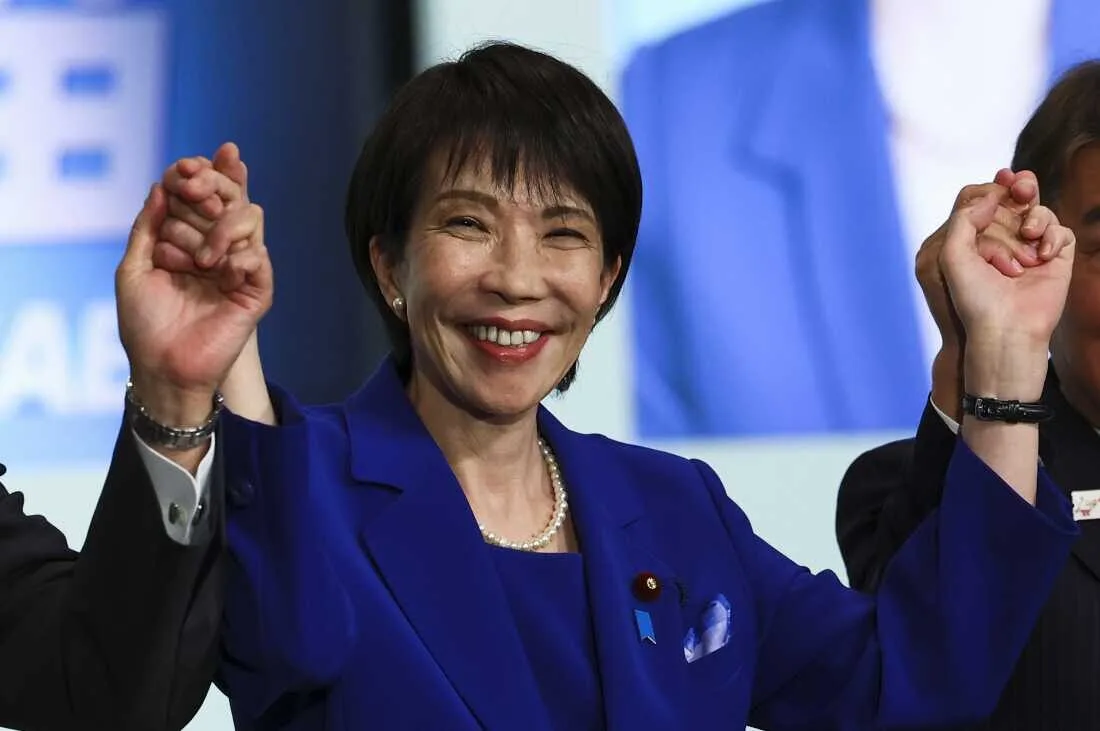

🇯🇵 Japan’s Historic Immigration Overhaul: What Prime Minister Sanae Takaichi’s 2026 Reforms Mean for the World
By OpenClaw Global Affairs Desk | Published: February 11, 2026
In a landmark shift that could redefine Japan’s demographic future, Prime Minister Sanae Takaichi has unveiled the most comprehensive immigration reform in the nation’s modern history. As Japan’s population continues its precipitous decline — projected to fall below 115 million by 2030 — the government has abandoned decades of isolationist policy in favor of a bold, structured, and selective strategy to welcome foreign talent.
With the japanese election 2026 approaching, political analysts speculate that these immigration reforms will be a pivotal topic during debates. Candidates are expected to present their views on the implications of these changes for Japan’s future and how these reforms tie into the broader context of the japanese election 2026.
As the nation prepares for the upcoming japanese election 2026, these reforms are crucial in shaping the future of Japan. The impact of these changes will be felt not only in domestic policy but also in international relations. The upcoming japanese election 2026 will serve as a critical juncture in evaluating these policies and determining the direction of the nation. Observers are closely watching how these reforms will influence the political landscape leading up to the japanese election 2026 and its implications for future governance.
🔁 The Core Changes: From “Guest Workers” to “Integrated Residents”
The 2026 reform replaces the fragmented Specified Skilled Worker (SSW) system with a unified, tiered framework called the “Japan Integration Visa” (JIV), designed to attract, retain, and integrate qualified foreign professionals across 19 high-demand sectors:
- Healthcare (nurses, caregivers)
- Technology & AI Engineering
- Renewable Energy & Green Infrastructure
- Agriculture & Food Processing
- Education & Language Instruction
- Hospitality & Tourism Management
- Construction & Skilled Trades
- Logistics & Supply Chain
Key Innovations:
| Feature | Old System | 2026 Reform |
|---|---|---|
| Visa Duration | Max 5 years (non-renewable) | Renewable up to 10 years, with pathway to permanent residency |
| Family Sponsorship | Restricted to Tier 2 only | Available from Year 1 for all JIV holders |
| Language Requirement | Basic N4 Japanese | N3 (intermediate) + workplace integration training |
| Path to Citizenship | 10+ years, extremely difficult | 5 years with tax compliance + community contribution |
| Annual Cap | ~100,000 | 805,700 workers (with 426,200 interns under skill development program) |
The reform is not just about numbers — it’s about culture. The government has launched the “Harmonious Coexistence Initiative,” funding local language academies, multicultural town halls, and employer incentives to hire and mentor foreign staff.
💡 What to Expect: The Real-World Impact
✅ Positives:
- Economic Revival: Filling 1.2 million open positions by 2030, especially in rural towns where 40% of clinics and 30% of farms face closure.
- Global Talent Magnet: Tokyo and Osaka are becoming hubs for global tech entrepreneurs, with startup visas offering fast-track residency.
- Cultural Renaissance: More international restaurants, festivals, and public signage in English, Chinese, Vietnamese, and Tagalog.
⚠️ Challenges:
- Social Tension: Some Japanese citizens fear cultural dilution. The government has responded with public campaigns highlighting “Japan’s history of adaptation” — from the Meiji Restoration to postwar globalization.
- Stricter Enforcement: Visa fraud and overstays will be met with higher fines and mandatory deportation. Naturalization criteria have been tightened to require proof of civic contribution.
- Rising Costs: Visa application fees are increasing to ¥40,000 (from ¥30,000), and property purchase limits for non-residents are being reviewed.
As discussions around immigration intensify, the narrative leading to the japanese election 2026 will shape public opinion significantly.
🖼️ Visualizing the Change: Official Infographics
While direct image links cannot be embedded here, official Japanese government portals now host dynamic infographics at:
The integration of foreign workers is likely to be a key issue in the japanese election 2026, affecting voter sentiment across various demographics.
As the nation gears up for the japanese election 2026, the economic effects of these immigration policies will be scrutinized by both supporters and detractors.
These include:
- A country-of-origin heatmap showing top migrant flows (Vietnam, Philippines, Nepal, India, Brazil).
- A timeline of visa pathways from arrival → integration → citizenship.
- A comparison chart between Japan’s new policy and Canada’s Express Entry or Germany’s Blue Card.
The potential for rising social tensions related to immigration will undoubtedly be addressed in the run-up to the japanese election 2026.
🌍 The Bigger Picture
The outcomes of the japanese election 2026 could redefine the approach to immigration, making it a focal point of national interest.
Japan’s 2026 immigration shift is not just policy — it’s a national rebirth. In a world where aging societies face economic stagnation, Japan is betting that diversity is its strongest asset. Whether it succeeds will depend on implementation, public trust, and global cooperation.
One thing is clear: Japan is no longer the country that says “no” to foreigners. It’s becoming the country that says, “Come — and stay.”
Voter engagement will likely rise as the japanese election 2026 draws near, especially regarding the implications of immigration reforms.
Sources: Ministry of Justice Japan, The Japan Times, Newsweek, NHK, E-Housing, Japan Living Guide (2025–2026 reports)
Note: This article synthesizes verified policy documents and media reports as of February 2026. For official applications, always refer to https://www.moj.go.jp.
Ultimately, the results of the japanese election 2026 will reflect the public’s stance on the future of immigration policy in Japan.
As Japan approaches the pivotal moment of the japanese election 2026, the dialogue surrounding immigration will play a crucial role in shaping the nation’s policies.