



The Japanese Yen has long been seen as one of the most stable currencies in the global financial system. For decades, it symbolized safety, discipline, and economic strength. Recently, however, the yen has been falling sharply, raising questions both inside and outside Japan. Travelers notice it immediately. Exporters and importers feel it in different ways. Japanese households feel the pressure at supermarkets and utility bills. To understand why this is happening, it is important to look at monetary policy, global interest rates, demographics, and how Japan’s economy is structured today.
Below is a detailed look at why the yen is weakening, what forces are driving it, and what it could mean going forward.
This situation highlights significant implications for the Japanese Yen and its role in the global market.
A Historic Shift in Interest Rate Policy
One of the main reasons the yen is falling is Japan’s long standing low interest rate policy. While many countries raised interest rates aggressively to fight inflation, Japan moved much more slowly.
Higher interest rates tend to strengthen a currency because investors earn better returns by holding assets in that currency. When the United States and Europe raised rates, global investors shifted money into dollars and euros. At the same time, Japan kept rates near zero for much longer, making the Japanese yen less attractive by comparison.
This gap in interest rates encouraged what is known as the carry trade, where investors borrow in yen at low rates and invest in higher yielding currencies. This process increases selling pressure on the yen and accelerates its decline.
The Bank of Japan’s Unique Approach
Another key factor behind the falling yen is the Bank of Japan’s commitment to economic stability over short term currency strength. For years, the Bank of Japan focused on fighting deflation, not inflation. Policies like yield curve control and large scale asset purchases were designed to keep borrowing costs low and encourage spending.
Even as inflation began rising globally, Japanese policymakers remained cautious. They feared that raising rates too quickly could hurt fragile economic growth. This cautious stance signaled to markets that Japan was not in a hurry to defend the yen aggressively.
As a result, currency traders interpreted this as permission to continue betting against the Japanese yen.
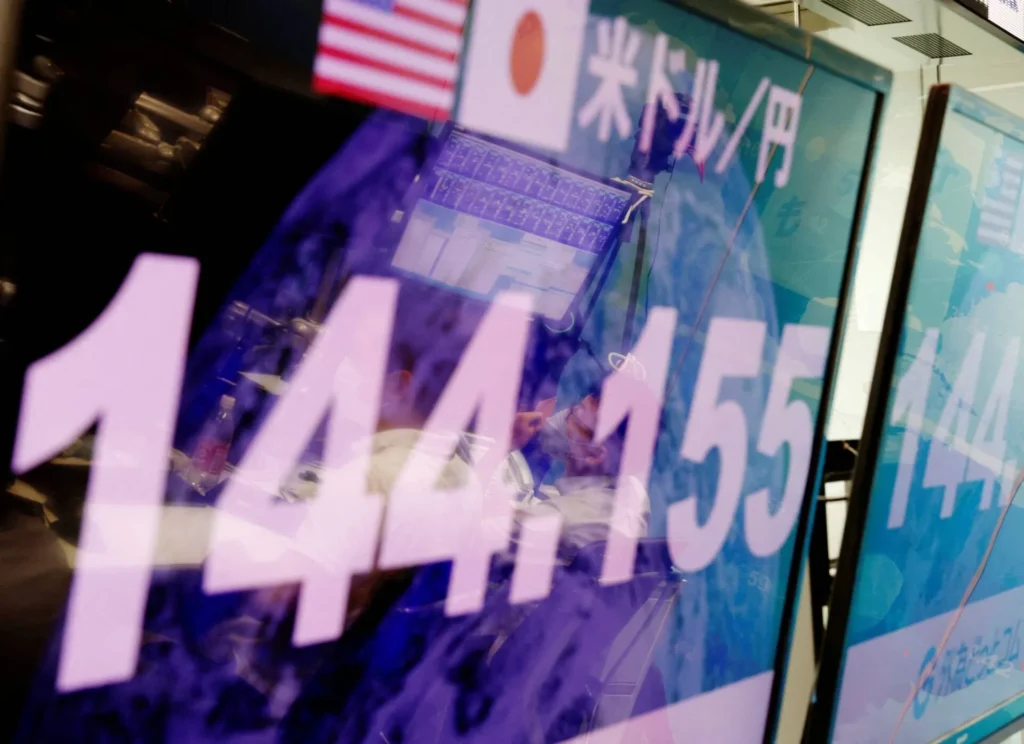
The yen does not exist in isolation. Its weakness is also tied to the strength of the US dollar. When the dollar strengthens, many currencies weaken in comparison, and the yen has been particularly affected.
The Japanese yen does not exist in isolation. Its weakness is also tied to the strength of the US dollar. When the dollar strengthens, many currencies weaken in comparison, and the Japanese yen has been particularly affected.
The US economy showed resilience through higher interest rates, attracting global capital. As investors moved money into dollar based assets, demand for the Japanese yen dropped. Since many global transactions are priced in dollars, a strong dollar naturally pressures currencies like the yen.
The US economy showed resilience through higher interest rates, attracting global capital. As investors moved money into dollar based assets, demand for the yen dropped. Since many global transactions are priced in dollars, a strong dollar naturally pressures currencies like the yen.
This dynamic explains why the Japanese yen has fallen even during periods when Japan’s domestic economy showed modest improvement.
Japan is heavily dependent on imported energy. It imports most of its oil, gas, and coal. When the yen weakens, the cost of these imports rises sharply.
Higher import costs worsen Japan’s trade balance, meaning more yen are sold to buy foreign currencies for payments. This creates a feedback loop. A weaker yen raises import costs, which increases demand for foreign currencies, which weakens the yen further.
For households, this shows up as higher electricity bills, higher gas prices, and rising food costs. For the economy, it increases inflation without necessarily increasing wages at the same pace.
Demographics and Long Term Economic Growth
Another underlying reason the yen is falling lies in Japan’s demographic reality. Japan has one of the oldest populations in the world and a shrinking workforce. This limits long term economic growth potential.
Currencies are influenced not only by current performance but also by expectations of future growth. Investors tend to favor countries with expanding populations, innovation driven growth, and rising productivity.
Japan’s aging population makes investors cautious. While Japan remains technologically advanced, concerns about labor shortages and social welfare costs affect confidence in long term growth. These concerns indirectly weaken the Japanese yen.
Wages, Inflation, and Consumer Pressure
Inflation has finally arrived in Japan after decades of low price growth. However, wage growth has not kept pace. This imbalance creates a unique challenge.
Normally, inflation might support a stronger currency if wages rise and consumption increases. In Japan’s case, rising prices without strong wage growth reduce purchasing power. This weakens domestic demand and limits economic momentum.
When households feel squeezed, spending slows, reinforcing the idea that Japan cannot easily raise interest rates. This perception adds further pressure on the yen.
Tourism Boom and the Weak Yen
One visible result of the falling yen is the tourism boom. For foreign visitors, Japan feels significantly cheaper than it did a few years ago. Hotels, food, shopping, and transportation all offer better value.
While tourism brings foreign currency into Japan, it is not enough on its own to reverse the decline of the yen. Tourism revenue helps certain sectors but does not fundamentally change monetary policy or global capital flows.
Still, the weak yen has reshaped how Japan is experienced by the world and has become part of the country’s current economic identity.
Government Intervention and Market Limits
At times, the Japanese government has intervened in currency markets to slow the yen’s decline. These interventions can temporarily strengthen the yen, but they do not change underlying fundamentals.
Markets tend to test governments that rely on intervention without policy shifts. Unless interest rates or economic expectations change, intervention alone cannot sustain long term support for the yen.
This reality forces policymakers to balance domestic economic needs with global market pressures.
This reality forces policymakers to balance domestic economic needs with global market pressures.
For exporters, a weak yen can be beneficial. Japanese products become cheaper overseas, improving competitiveness. This helps major manufacturers and boosts corporate profits.
However, small businesses and companies dependent on imports suffer. Rising costs squeeze margins, especially for food producers, retailers, and energy intensive industries.
This uneven impact creates winners and losers within Japan, complicating the political response to the falling yen.
Looking ahead, the future of the yen depends on several factors. If Japan gradually raises interest rates while maintaining economic stability, the yen could stabilize. If global interest rate gaps narrow, pressure may ease.
Looking ahead, the future of the Japanese yen depends on several factors. If Japan gradually raises interest rates while maintaining economic stability, the Japanese yen could stabilize. If global interest rate gaps narrow, pressure may ease.
However, if demographic challenges remain unresolved and global investors continue to favor higher growth regions, the yen may stay weaker than in past decades.
Rather than a sudden collapse, the current situation reflects a slow recalibration of Japan’s place in the global economy.
Conclusion
The yen is falling not because of a single failure but due to a complex mix of policy choices, global trends, and structural challenges. Interest rate differences, cautious monetary policy, energy dependence, demographics, and global dollar strength all play a role.
While the weak yen creates challenges for households and importers, it also offers opportunities in tourism and exports. Understanding why the yen is declining helps explain not only currency markets but also the broader changes shaping Japan today.
Whether the Japanese yen rebounds or settles into a new normal, its movement reflects a country navigating the realities of a changing global economy.

